Fire Damage
Demolition
When fire takes a structure, the demolition that follows is not standard work. Compromised framing, exposed hazardous materials, insurance timelines, and contaminated debris all require a contractor who has been through it before. We have. Including Camp Fire recovery in Paradise and Magalia.
See your price in 60 seconds.
Real number, on screen. No phone tag.
CA Contractor #1117491 · Insured · Free walkthrough confirms final price.
Not Standard Demolition
Fire Damage Changes
Everything About the Job
A fire-damaged structure is not just an old building that needs to come down. The fire has already done damage that makes the demolition more dangerous, more regulated, and more complex. Here is what separates fire damage demolition from every other type of demo work.
Heavier Dump Fees
Fire departments spray enormous amounts of water during suppression. Wood turns to ash, mixes with water, and becomes heavy mud. That added weight drives up dump fees significantly compared to standard demolition debris.
Contaminated Soil & Ash
Ash mixes into the surrounding dirt. Some building departments require that contaminated dirt be scraped and hauled to an approved facility. This adds time, labor, and disposal costs that do not exist on a standard demo job.
Limited Landfill Options
Many landfills will not accept fire-burned debris. Loads have to go to specialty facilities that are often farther away, which adds hauling time and cost. Every load must be tarped with no debris outside the trailer.
Insurance Coordination
In California, homeowners choose their own contractor for fire-burned jobs. It is not about the lowest bid. We work with insurance adjusters, submit and adjust bids, and send letters to agents on your behalf to move your claim forward.
10 to 40% Higher Cost
Between the heavier debris, specialty disposal, tarping requirements, and extra labor for foundation preservation, fire damage demolition runs 10 to 40% more than a normal house demo of the same size.
Foundation Preservation
The most common thing to save is the concrete foundation. Leaving it intact while we demolish above it skips new permits, new engineering, and repouring. It takes more time to demolish carefully, but it shortens your path back to move-in.
Real Experience
Camp Fire Recovery.
Paradise & Magalia.
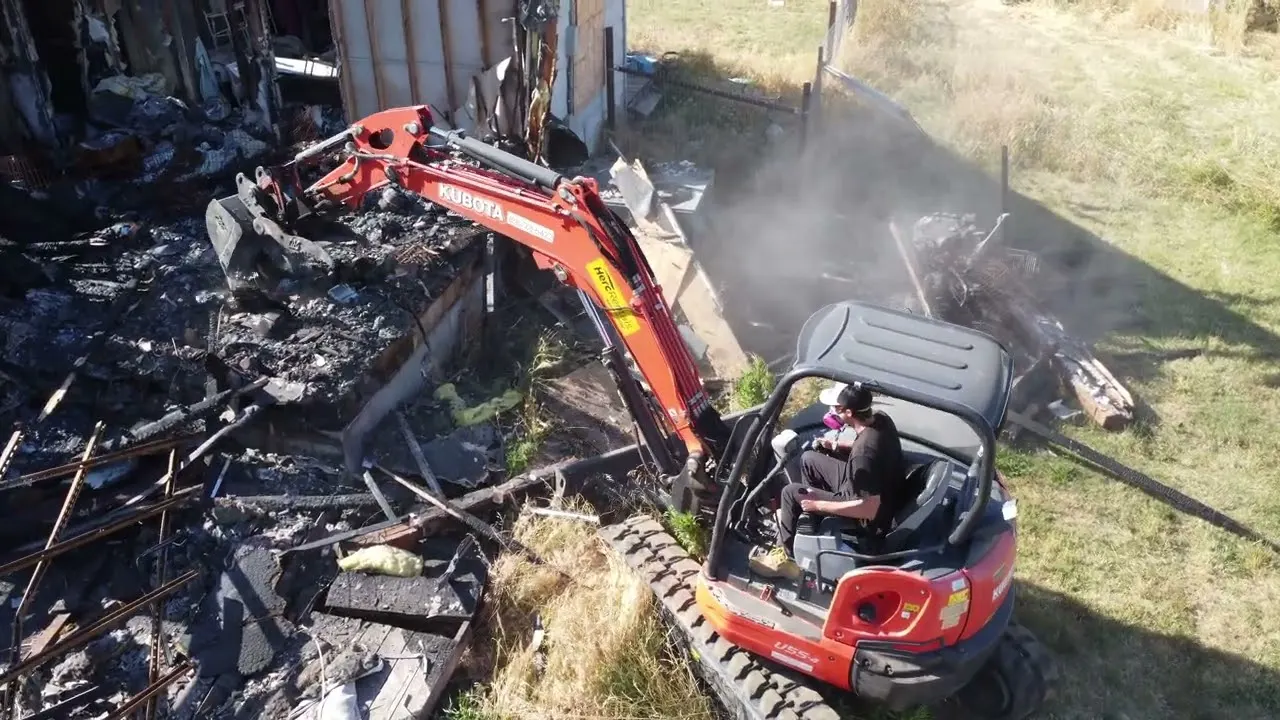
The 2018 Camp Fire destroyed over 18,000 structures across Paradise and the surrounding ridge communities. Our crew was on the ground in the recovery effort. The job involved a ton of downed trees and a manufactured house that had burned to the ground. Everyone had to wear hazmat suits and earned higher wages due to the conditions. We demolished the structure and hauled everything to Neal Road Landfill.
Since then, we have completed roughly 30 fire demolition projects ranging from mobile homes to garages to entire houses, including work in Berry Creek and upcoming projects in Gerber. That hands-on experience shapes how we approach every fire damage job. We understand the structural unpredictability, the hazmat complexities, and the emotional weight of clearing a property after a loss.
Our Process
How We Handle
Fire Damage Demolition
Fire damage demolition follows a more rigorous process than standard structural demolition. Every step accounts for the additional hazards, regulatory requirements, and insurance documentation that fire-damaged properties demand.
Onsite Assessment & Insurance Coordination
We walk the property with you and your adjuster if needed. Evaluate structural integrity, identify hazmat concerns, assess equipment access. Written scope-of-work and itemized estimate formatted for insurance submission.
Hazmat Survey & Abatement
Certified asbestos survey on any pre-1980 structure. Fire can make previously non-friable materials dangerous. If the survey comes back positive, licensed abatement contractors handle removal before we touch the structure.
Permitting & Notifications
Demolition permit through the local building department. NESHAP notification through the air quality management district. We prepare and submit all paperwork. Nothing falls through the cracks.
Utility Disconnection
Gas, electric, water, and sewer disconnected and capped. Fire-damaged utility connections can be compromised in ways that are not visible, so we verify disconnection before any equipment enters the site.
Structural Demolition
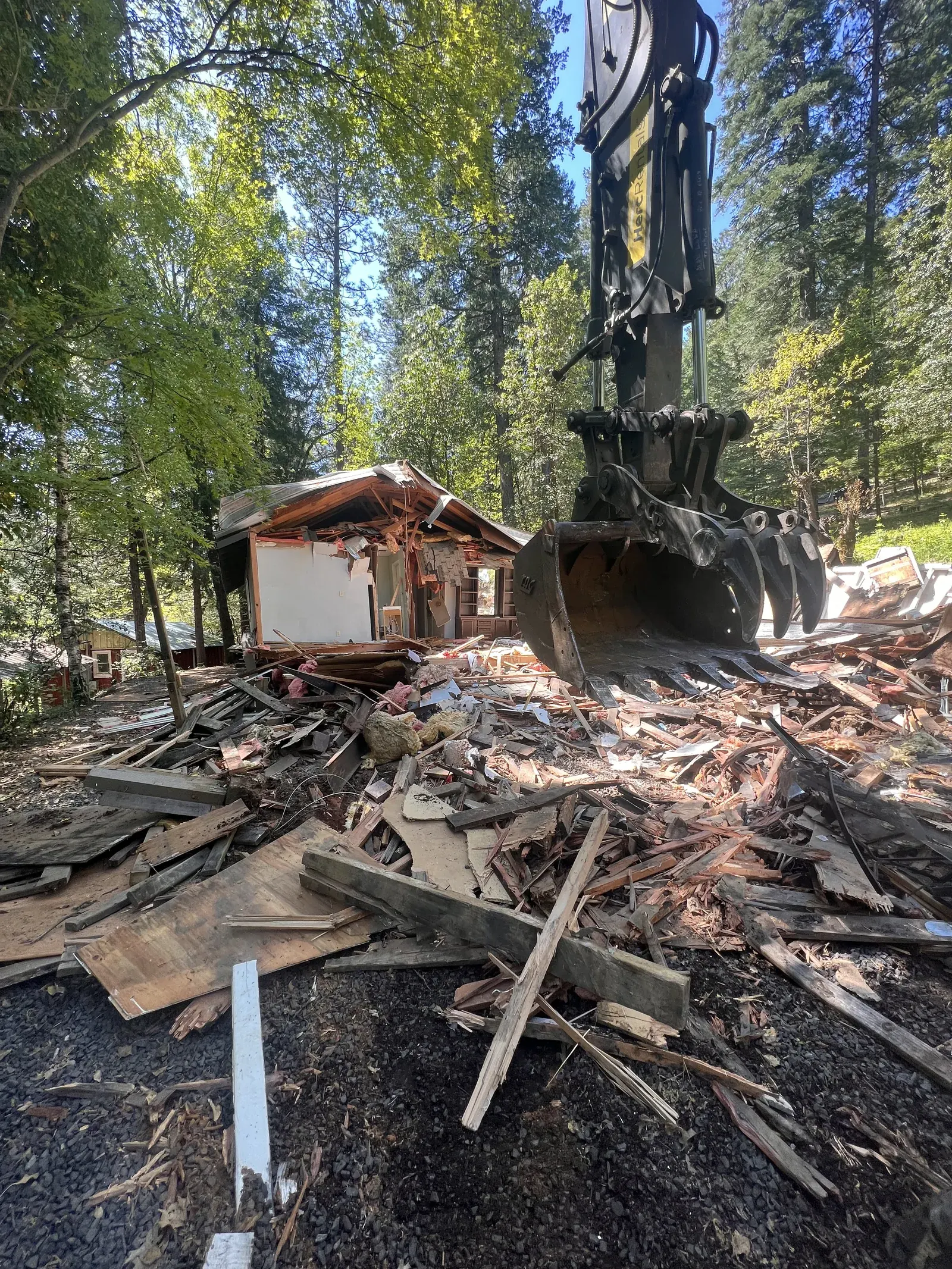
Excavators with grapple attachments methodically dismantle the fire-damaged structure. Our operators read the building as they work. Adjusting approach based on how the fire affected different sections. Dust and erosion control throughout.
Debris Removal & Site Clearing
Fire debris sorted on site. Contaminated materials separated from recyclable metals and concrete. Ash and contaminated soil removed. Over 70% of materials recycled. Every load documented with dump receipts and weight tickets.
Foundation Work
Full foundation removal or preservation depending on your rebuild plans. If you are rebuilding in the same square footage and footprint, we carefully demolish around the foundation to keep it intact. A preserved foundation skips new permits, new engineering, and repouring.
Grading & Build-Ready Prep
Engineered fill, compaction in lifts, finish grading for proper drainage. Your lot is left build-ready for new construction. No additional site work needed before your builder breaks ground.
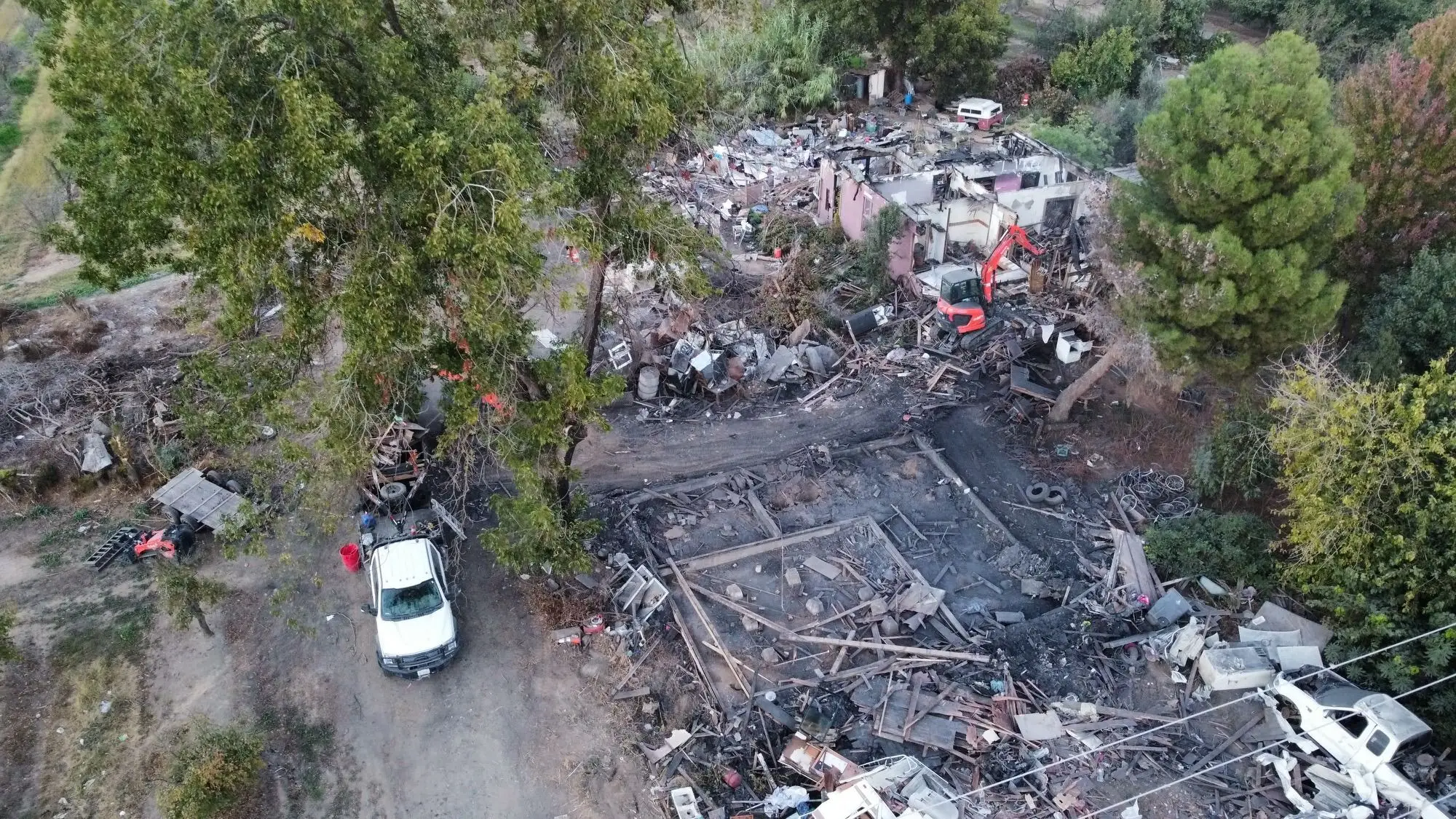
Drone Photography
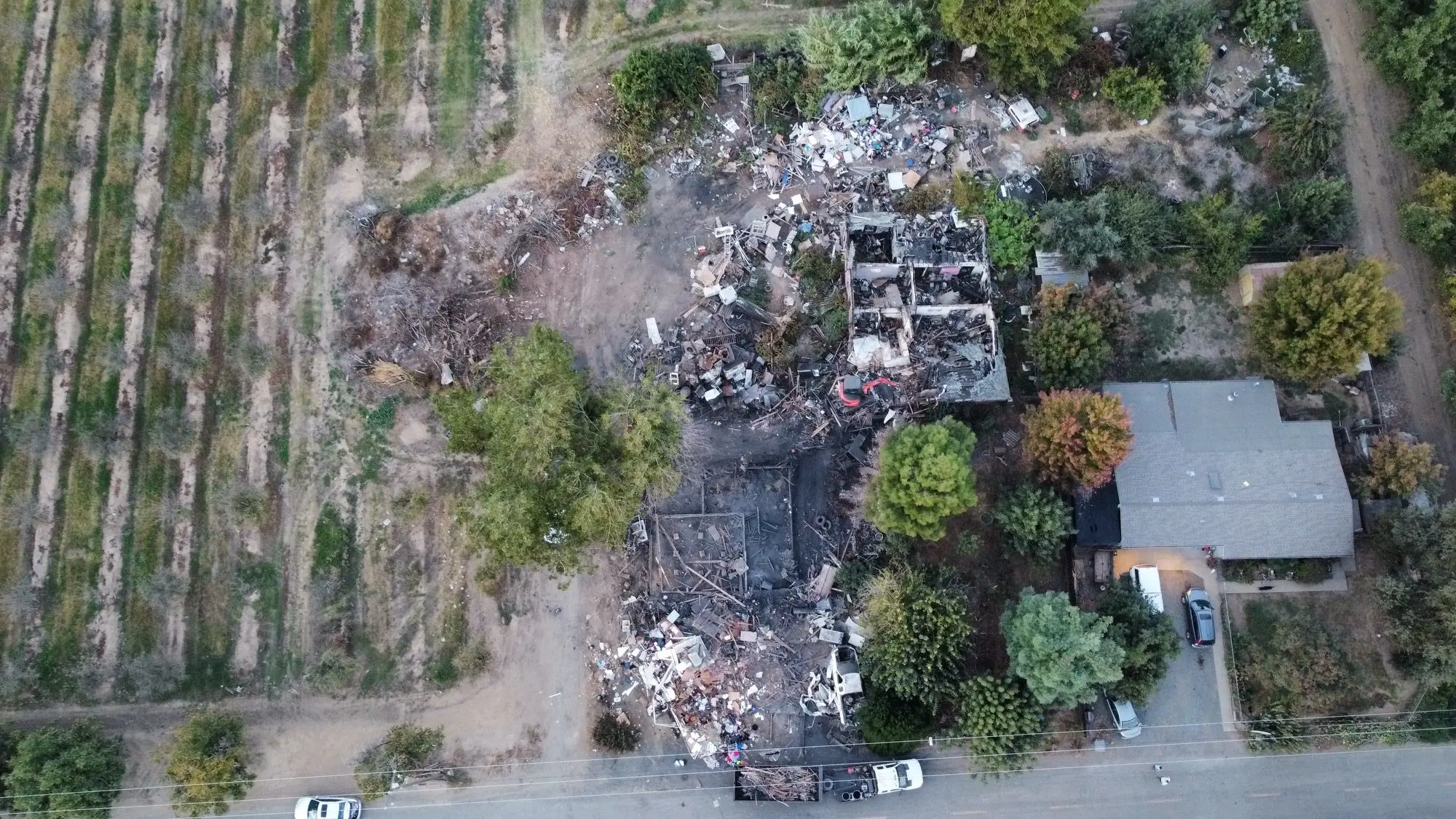
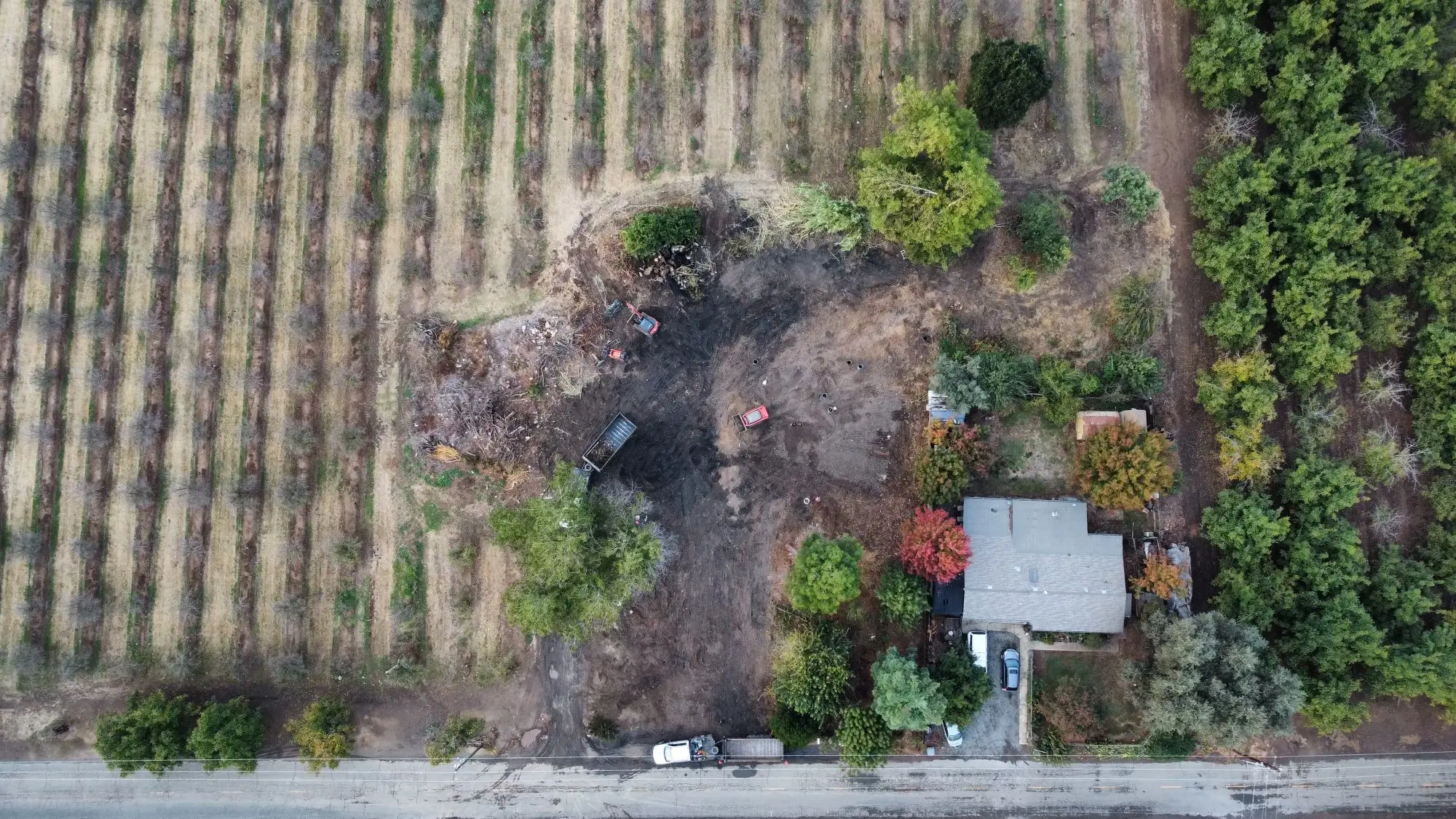
Every once in a while, customers want to sell the property right after demolition. We take drone shots of the cleared lot so they can market the property with clean, professional aerial photos.
From the air
The same property, before and after fire debris removal
Burned structures and debris beside an orchard, then the same ground cleared five days later. The house next door is untouched.
Insurance Claims
We Work With
Your Insurance
Fire damage demolition almost always runs through an insurance claim. We work with adjusters, go back and forth submitting bids, and handle the documentation process so you do not have to. In California, homeowners get to choose which contractor they want for fire-burned jobs. It is not about the cheapest bid. You choose whoever you trust the most.
Bid Submission & Adjustment
We submit bids to your insurance company, adjust pricing as needed through the back-and-forth process, and send letters to insurance agents on your behalf to keep the claim moving forward.
Progress Documentation
Photos at every stage of the project. Before, during, and after. Timestamped and organized for your claim file.
Dump Receipts & Weight Tickets
Every load of debris documented with facility receipts and weight tickets. Full chain of custody on hazardous materials.
Advocacy for Homeowners
We have seen insurance companies miss critical damage. One of our Folsom customers had a fire-burned house where insurance did not mark it as a total loss because the subfloor was hidden under debris and a collapsed, waterlogged roof. We charged the customer to remove a section of floor to expose the subfloor and joists. Insurance then approved reimbursement for those items on the rebuild, and the customer decided to do a full tear down.
Preserve Your Foundation, Skip the Repour
The most common thing to save on a fire demolition job is the concrete foundation. Leaving it intact while we demolish the structure above skips new permits, new engineering, and repouring. It takes more time to demolish carefully around the foundation, but it shortens your path back to move-in. This works best when you plan to rebuild in the same square footage and footprint.
Why Choose Us
Fire Damage Demolition
Requires a Specialist
Not every demolition contractor has experience with fire-damaged structures. The hazards, the regulations, and the insurance process are fundamentally different. Here is what we bring to every fire damage project.
Camp Fire Experience
We worked Camp Fire recovery in Paradise and Magalia. Demolishing fire-damaged homes and clearing lots for rebuilding. That experience is in every fire damage project we take on.
CA Contractor #1117491
Licensed California demolition contractor with full liability and workers' compensation coverage. OSHA-10 Certified. Every crew member trained on demolition safety and hazmat protocols.
Insurance-Ready Documentation
Itemized estimates, progress photos, dump receipts, weight tickets, and hazmat reports. Formatted for insurance claim submission. We coordinate directly with your adjuster.
Hazmat Management
We coordinate certified asbestos surveys, licensed abatement, lead assessment, and contaminated soil handling. Full compliance with NESHAP, AQMD, and Cal/OSHA requirements.
Own Equipment Fleet
Excavators, skid steers, dump trucks, and roll-off containers. Our crew runs every project from start to finish. One company, one point of contact from estimate to clean lot.
70%+ Recycling Rate
Even on fire-damaged structures, we recycle over 70% of materials on most jobs. Metals, concrete, and clean wood separated on site. Every load tracked with facility receipts.
Full-Service
Related Demolition Services
Fire damage demolition is often part of a larger project. We handle every phase. From structural demolition to cleanup to site restoration.
Residential Demolition
Complete house and residential structure demolition with proper permitting and debris removal.
Learn MoreDemolition Cleanup & Debris Removal
Post-demolition cleanup, debris hauling, and site preparation.
Learn MoreProperty Restoration
Grading, compaction, and site prep after demolition for new construction.
Learn MoreCommon Questions
Fire Damage Demolition FAQs
Have a question about your fire damage project?
Call (916) 909-1359Fire Damage Demolition by Area
We serve Northern California within a 5-hour radius. See fire damage demolition services specific to your area.
Fire Damage? We Handle the Demolition.
Licensed demolition contractor with Camp Fire recovery experience. Hazmat coordination, insurance documentation, and complete site clearing. Free estimate.
Want a number before you call? See an instant price range in about a minute.